Knowing when meat is perfectly cooked can feel like guesswork, but slicing it open to check releases all those flavorful juices you worked to preserve.
With a bit of practice, you can tell doneness by sight, touch, and temperature, and with no cutting required. Mastering this skill will make your meals juicier, more flavorful, and consistently delicious.
Why Cutting Open Meat Is a Mistake
When you cut meat mid-cook, you interrupt the resting and redistribution process of its juices. Those flavorful liquids spill out onto the cutting board, leaving the inside drier and less tender. Instead, rely on other cues that tell you what’s happening inside without letting heat or moisture escape.
Every protein behaves differently, but whether you’re cooking steak, chicken, or pork, the key indicators—color, texture, and internal temperature—remain the same.
For more safety basics around cooking and storage, see Food Safety Myths You Should Stop Believing.
The Touch Test for Doneness
Professional chefs often use the touch test because it’s reliable once you get the hang of it. The firmness of cooked meat changes as it cooks—the more it is cooked, the firmer it feels.
Try this simple method for steak or pork:
- Rare: Feels like the soft pad under your thumb when your hand is relaxed.
- Medium: Feels like the same spot when you press your thumb and middle finger together—springy but not mushy.
- Well done: Feels firm, like the pad under your thumb when you press your pinky and thumb together.
For chicken, the touch test is less subtle. It should feel firm but still yield slightly under gentle pressure. If it’s rubbery, it’s undercooked; if it’s stiff, it’s gone too far.
If the rest of your meal needs a tweak, How to Rescue Over-Salted or Over-Spiced Dishes.
Visual and Time Cues
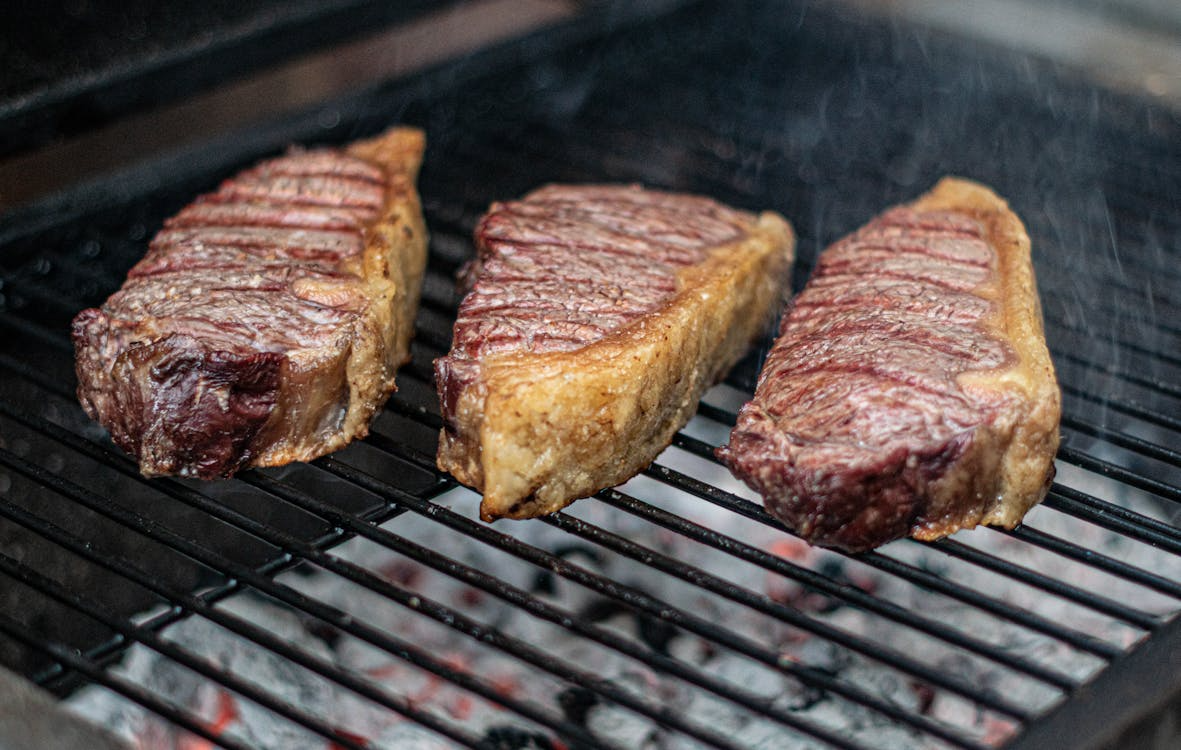
Color and texture also offer clues. Steak and pork develop a rich, caramelized crust when properly seared. Chicken turns opaque, and its juices run clear instead of pink. Whole poultry should have golden skin and slightly loosened leg joints.
Cooking time can also guide you, although it’s always an estimate. For instance, boneless chicken breasts typically require 6–8 minutes per side in a hot pan, while thick steaks need 4–5 minutes per side for medium-rare doneness. Keep in mind that carryover cooking, which is the rise in temperature after removing meat from the heat, can increase internal temperature by up to 5°F.
Using a Thermometer the Right Way
While the touch and visual tests are great, nothing beats a thermometer for accuracy. Insert it into the thickest part of the meat, avoiding bones or fat pockets. Ideal internal temperatures are:
- Beef & lamb (medium-rare): 130–135°F (54–57°C)
- Pork: 145°F (63°C)
- Chicken: 165°F (74°C)
- Fish: 125–130°F (52–54°C)
Once you reach the target temperature, remove the meat from the heat and let it rest for several minutes. Resting allows juices to redistribute, keeping every bite moist and flavorful.
Explore Sous Vide at Home: A Beginner’s Guide to Precision Cooking for ultra-precise cooking.
Practice Makes Perfect
At first, gauging doneness by touch or sight may feel uncertain, but with practice, your instincts will sharpen. Try comparing your touch-test results with a thermometer reading until you can reliably judge without one. Soon, you’ll cook confidently and produce perfectly pink steaks, juicy yet safe chicken, and tender pork that’s not dry.
Cooking meat to perfection isn’t a guessing game; it’s a balance of sensory awareness and science. Once you learn the signs, you’ll never need to cut open your masterpiece again.