A well-organized pantry is more than a tidy space. It’s the key to faster cooking, less food waste, and smarter grocery shopping.
When you can see what you have at a glance, you avoid duplicate purchases, expired items, and last-minute stress. With a few simple pantry organization ideas, you can transform your pantry into a more efficient and inspiring part of your kitchen.
Start with a Clean Slate
Before you organize, take everything out of the box. Wipe down shelves and group similar items together on the counter. Check expiration dates and toss anything stale, empty, or forgotten. You’ll probably uncover items you didn’t realize you had—like that third jar of peanut butter or half-used bag of flour.
Once everything’s visible, sort by type: grains, canned goods, snacks, baking supplies, and condiments. This step alone can instantly make your pantry feel more manageable.
See Meal Prepping 101: How to Plan, Cook, and Store Food Efficiently to put your pantry zones to work.
Create Zones for Efficiency
The key to a functional pantry is zoning, which consists of assigning each shelf or section a clear purpose. For example:
- Top shelves: Extra stock, bulk items, or infrequently used appliances.
- Eye-level shelves: Everyday essentials like rice, pasta, and snacks.
- Lower shelves: Heavier items like canned goods or large bottles.
Keep categories consistent so everyone in your household knows where things go. If you have kids, dedicate a “snack zone” with healthy grab-and-go options at their height.
Use Containers for Clarity and Freshness
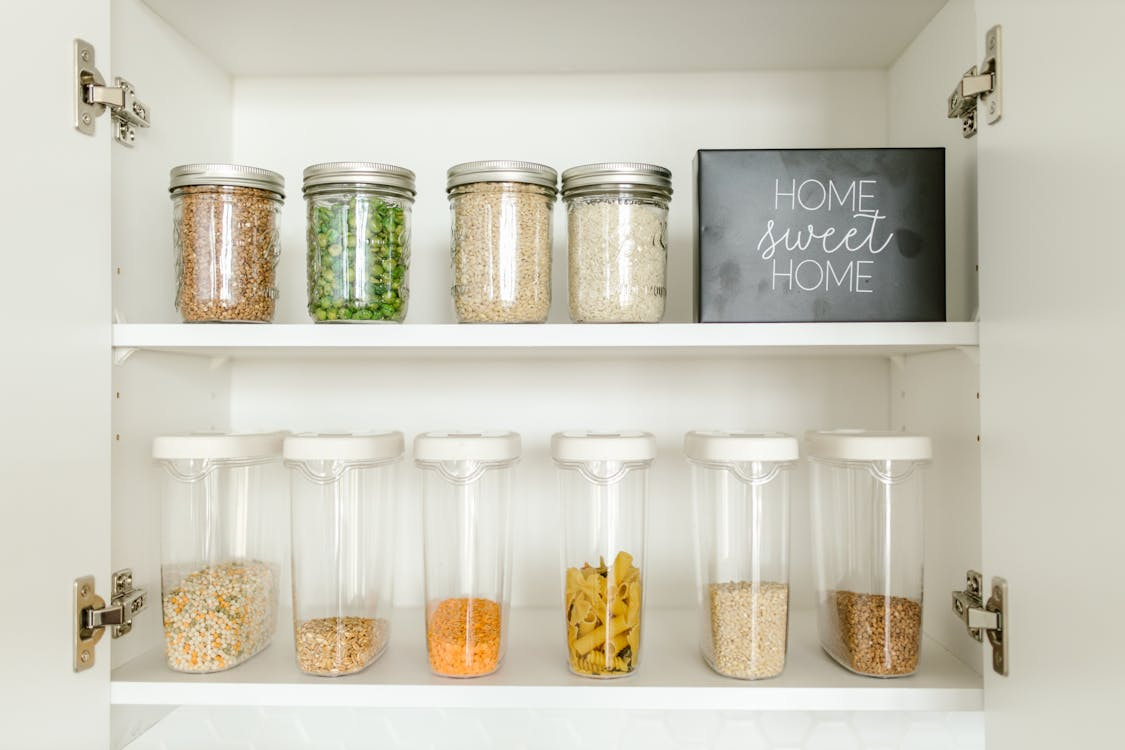
Investing in clear, airtight containers helps in two ways: it keeps food fresh and makes inventory easy to track and manage. Store dry goods, such as flour, sugar, oats, pasta, and cereal, in labeled containers to maintain freshness and prevent food contamination. Not only does it look clean and cohesive, but you’ll immediately see when you’re running low.
For small items, such as spices, seasoning packets, or tea bags, use baskets, bins, or lazy Susans. Grouping them by type makes it easier to grab what you need without having to rummage through them.
Check out The Ultimate Guide to Spices: From Mild to Wild for flavor inspiration.
Label Everything
Labels prevent confusion and make maintaining organization effortless. Use simple printed labels or chalkboard stickers so you can update them as contents change. Include not only the item name but also expiration dates if possible.
If you transfer bulk foods into containers, keep the cooking instructions from the packaging. Tape them to the bottom or back of the jar for easy reference.
Rotate and Restock Smartly
The “first in, first out” method used in professional kitchens is also effective at home. Place newer purchases behind older ones so you use up older items first. Check your pantry monthly for items nearing their expiration dates and plan meals accordingly.
When creating a grocery list, start by checking your pantry. This habit prevents overbuying and encourages creativity by using what you have before shopping for more.
Check out How to Read Food Labels Like a Nutritionist to make smarter choices as you stock up.
Make It Aesthetic and Functional
A tidy pantry can be both practical and visually pleasing. Use matching jars or baskets for a cohesive look, and consider adding small touches like shelf liners, risers for canned goods, or under-shelf baskets for extra space. The more inviting your pantry looks, the more likely you are to keep it organized.
To keep your pantry in sync with your shopping, explore Cooking with Seasonal Produce: What’s Fresh This Month.
A System That Saves Time and Money
An organized pantry makes meal prep a breeze. You’ll cook faster, waste less, and save money by avoiding duplicate purchases. The key is maintenance: take five minutes each week to tidy, restock, and adjust. Over time, this small effort pays off in convenience and a sense of peace of mind.
Because when everything has its place, you spend less time searching and more time cooking, creating, and enjoying your meals.