After cooking meat, poultry, or vegetables, you may notice a golden-brown layer stuck to the bottom of your pan. Don’t scrub it away. That’s pure flavor.
Deglazing is the technique that transforms those caramelized bits, known as fond, into rich sauces that elevate even the simplest dishes. Learning how to deglaze a pan is one of the easiest ways to cook like a pro and make every drop of flavor count.
What Is Deglazing and Why Does It Matter?
Deglazing is the process of adding liquid to a hot pan after searing or sautéing food to dissolve the browned residue left behind. Those little bits aren’t burnt. They’re concentrated flavor from the Maillard reaction, where proteins and sugars combine under heat. By loosening and dissolving them, you create a base for flavorful sauces, gravies, and reductions.
This simple step bridges cooking and chemistry: as the liquid hits the hot pan, it lifts the fond, capturing all the deep, roasted notes that define a restaurant-quality sauce. Whether you’re cooking steak, chicken, mushrooms, or even onions, deglazing instantly intensifies taste and aroma.
To understand the browning, see The Science of Searing: How to Lock in Flavor Like a Pro for more details.
Choosing the Right Liquid
The liquid you choose determines the personality of your sauce. Wine, broth, stock, vinegar, or even water can work depending on your dish.
- Wine adds acidity and depth. Use white for poultry and fish, red for beef and lamb.
- Broth or stock enhances savory richness without overpowering.
- Vinegar, citrus juice, or even beer can add brightness and complexity.
Avoid creamy or starchy liquids for the deglazing step, as they can curdle or clump before the fond dissolves. You can continually whisk them in later once the sauce is stable and the pan has cooled slightly.
Browse Cooking Oils Demystified: Which to Use for Frying, Sautéing, and Baking for more on liquid choices.
How to Deglaze Step-by-Step
- Remove the main ingredients. Transfer your cooked meat or vegetables to a plate and keep them warm. Leave any browned bits and a small amount of fat in the pan.
- Turn down the heat slightly. Moderate heat prevents burning the fond while still being hot enough to deglaze.
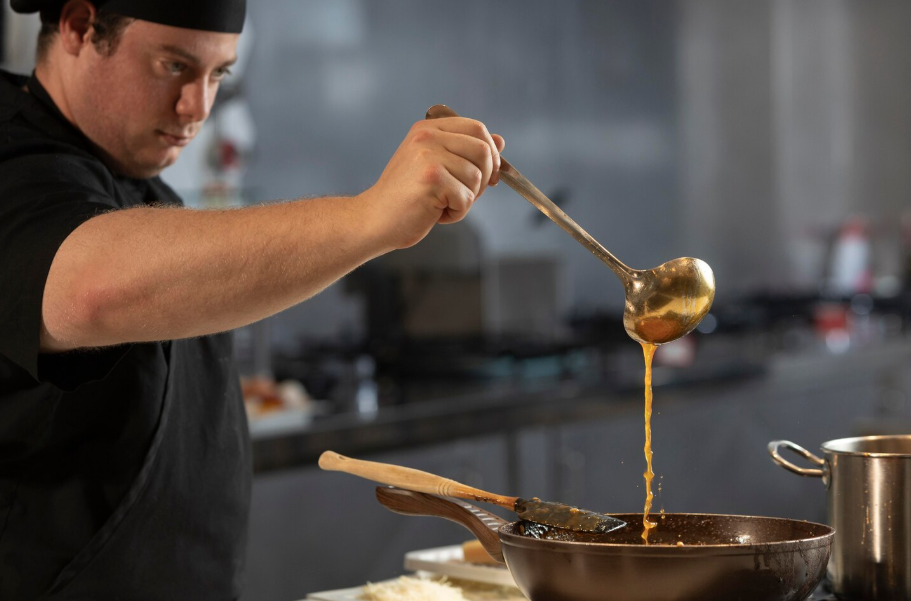
- Add liquid. Pour in about ¼ to ½ cup of your chosen liquid. The pan should sizzle immediately.
- Scrape the bottom. Use a wooden spoon or spatula to loosen all the browned bits as the liquid bubbles gently.
- Reduce and finish. Let the liquid simmer until it thickens slightly, concentrating the flavor. For a more luxurious sauce, whisk in a pat of butter or a splash of cream at the end.
This technique not only makes a delicious sauce but also cleans your pan naturally, which is a bonus for home cooks.
Pairing Deglazed Sauces with Dishes
The beauty of deglazing lies in its versatility. A red wine reduction pairs beautifully with steak or lamb, while a lemon and white wine sauce complements fish or chicken. For vegetarian dishes, deglaze with vegetable stock or balsamic vinegar to enhance the natural sweetness of roasted vegetables.
Even quick weeknight meals can benefit from a simple pan sauce. After searing chicken breasts, deglaze with chicken broth, add a spoonful of mustard, and finish with a splash of cream for instant comfort food.
If you love layering flavors, don’t miss The Ultimate Guide to Spices: From Mild to Wild.
Unlocking the Flavor Hidden in Your Pan
Deglazing isn’t just a fancy culinary trick. It’s a mindset of not wasting flavor. Every browned speck holds potential, and learning to capture it means your meals will always have depth and character. Once you’ve tried it, you’ll never look at the bottom of a pan the same way again.